Here’s something that’ll blow your mind: the way fintech companies decide whether to lend you money is getting a serious upgrade. And I’m not talking about minor tweaks to old formulas — I’m talking about reinforcement learning algorithms that literally learn from every lending decision they make.
High-Frequency Trading with RL: Strategies and Implementation
on
Get link
Facebook
X
Pinterest
Email
Other Apps
So you want to know about high-frequency trading with reinforcement learning? Buckle up, because we're about to dive into one of the most technically demanding and financially rewarding applications of machine learning in existence.
I've spent years watching RL transform HFT from an already sophisticated field into something that feels almost like science fiction. We're talking about algorithms that execute thousands of trades per second, learn from market microstructure patterns humans can't even perceive, and continuously adapt to competitors who are doing the exact same thing.
The stakes? Billions of dollars. The competition? Absolutely brutal. The technology? Mind-blowing.
What Makes HFT Different (And Why It's Perfect for RL)
Let's get something straight right away: high-frequency trading isn't just regular trading but faster. It's a completely different beast with its own rules, challenges, and opportunities.
HFT operates on timescales measured in microseconds. At these speeds:
News doesn't matter (it takes seconds to process)
Fundamental analysis is irrelevant (you're not holding positions that long)
Traditional technical indicators are too slow
Every nanosecond of latency costs money
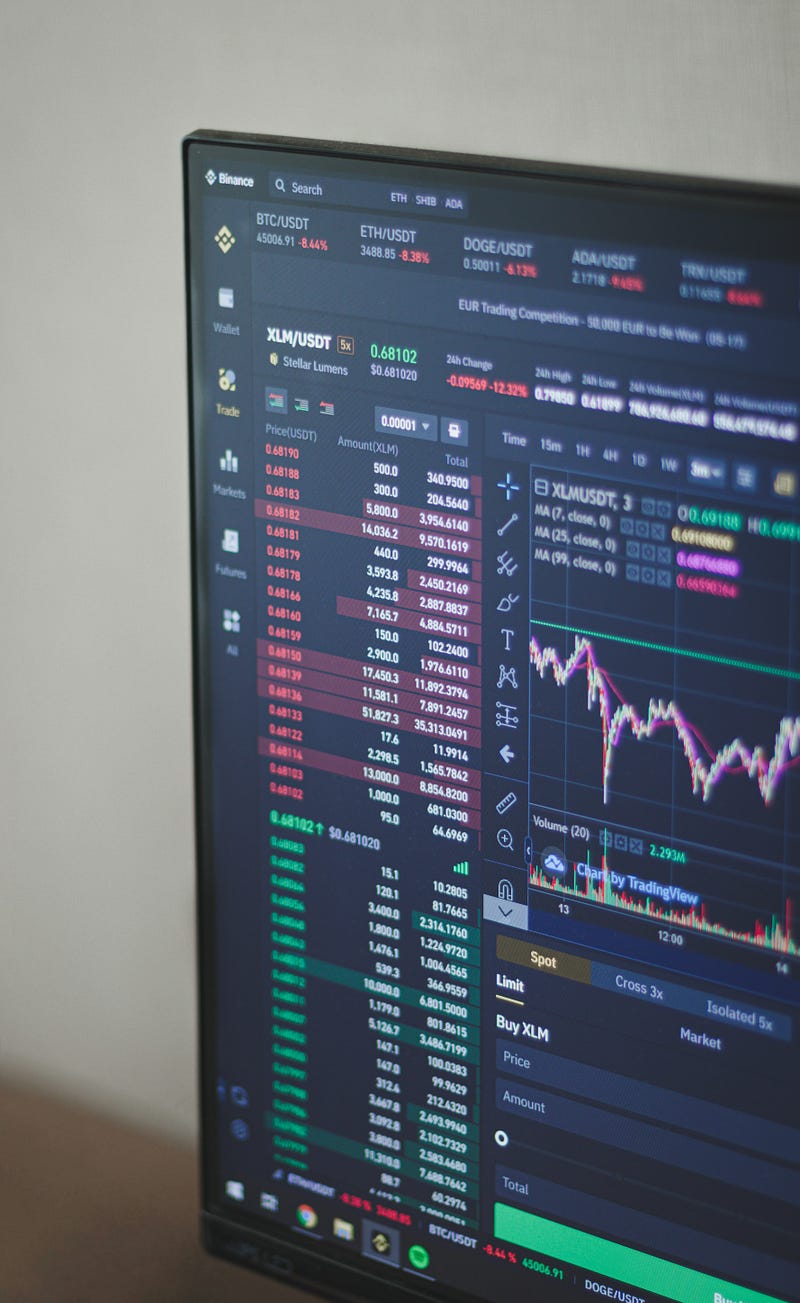
What does matter? Market microstructure. You're trading on order book dynamics, fleeting price inefficiencies, and temporary supply-demand imbalances that exist for milliseconds before disappearing.
This environment is perfect for reinforcement learning because:
Decisions are sequential and highly interdependent
The state space is complex but observable (order books, trade flow, market depth)
Feedback is rapid—you know if your trade worked in milliseconds
The optimal strategy constantly shifts as markets and competitors evolve
Traditional rule-based HFT systems work okay, but they can't adapt fast enough to changing market dynamics. RL systems learn, adjust, and improve continuously. That adaptation is worth serious money.
The RL Framework for HFT
Let me break down how RL actually gets applied to high-frequency trading. This isn't theoretical—this is what production systems look like right now.
State Representation
The state in HFT is everything your algorithm can observe about the market at a given microsecond. This typically includes:
Order book data: Bid and ask prices at multiple levels, volumes at each level, order book imbalance
Recent trade flow: Size, direction, and aggressiveness of recent trades
Market indicators: Spread, volatility estimates, price momentum at ultra-short timeframes
Inventory position: Your current holdings and associated risk
Execution state: Partially filled orders, time in market, adverse selection costs
The state space is high-dimensional but structured. You're basically giving the agent a real-time snapshot of market microstructure.
Action Space
Actions in HFT are deceptively complex. They include:
Placing limit orders at specific prices and sizes
Sending market orders for immediate execution
Canceling existing orders
Modifying order sizes or prices
Doing nothing (sometimes the best action is waiting)
The action space is typically discretized for stability, though some implementations use continuous control. You might have 50-100 possible actions at any moment.
Reward Structure
Getting the reward function right is absolutely critical. You're optimizing for profitability while managing multiple constraints:
Realized profit/loss from closed positions
Unrealized P&L on open positions
Transaction costs (fees, spreads, slippage)
Inventory risk penalties
Adverse selection costs
Most HFT RL systems use shaped rewards that provide feedback at each timestep rather than waiting for position closure. You want the agent learning continuously, not just when it finally exits a trade.
Core HFT Strategies Enhanced by RL
Alright, let's talk about specific strategies where RL delivers massive improvements over traditional approaches. Ever wondered how modern HFT firms stay profitable in increasingly efficient markets? This is how.
Market Making with RL
We touched on RL market making earlier, but in HFT contexts it's even more extreme. You're providing liquidity across multiple venues simultaneously, managing inventory at microsecond timescales, and competing with other RL-powered market makers.
What RL brings to HFT market making:
Traditional market makers use static formulas to quote spreads based on volatility and inventory. RL market makers learn dynamic strategies that:
Adjust quotes based on order flow toxicity (detecting informed traders)
Optimize quote placement to maximize fill rates while avoiding adverse selection
Coordinate quotes across multiple exchanges to manage total exposure
Learn competitor behavior patterns and respond strategically
I've seen RL market making systems that recognize when another market maker is about to reprice and preemptively adjust their own quotes. This kind of strategic depth simply isn't possible with rule-based systems.
Optimal Trade Execution
When you need to execute a large order without moving the market, optimal execution becomes crucial. Traditional approaches like TWAP (time-weighted average price) or VWAP (volume-weighted average price) are predictable and exploitable.
Comments
Post a Comment